# Info on Cucurbita andreana
**URL:** https://goingtoseed.discourse.group/t/info-on-cucurbita-andreana/3245
**Category:** General Discussions
**Tags:** crop-wild-relatives, squash
**Created:** [December 3, 2024, 6:17pm UTC](https://goingtoseed.discourse.group/t/info-on-cucurbita-andreana/3245 "2024-12-03T18:17:11Z")
**Posts on this page:** 2
**Page:** 1
### Author:  [@suffling](https://goingtoseed.discourse.group/u/suffling)
#### Post date: [December 3, 2024, 6:17pm UTC](https://goingtoseed.discourse.group/t/info-on-cucurbita-andreana/3245/1 "2024-12-03T18:17:11Z")
I’m curious if people have info or experience with _Cucurbita andreana_. Apparently it is sometimes considered a separate squash species, other times considered a subspecies of maxima. Science journals seem to indicate it’s the wild ancestor of maxima from present day Uruguay and Argentina, and hybridizes easily.
Apparently it has bitter fruits and leaves, to the point of being unpalatable, but have been shown to have medically-active compounds that have been of interest in medical research. It also may have an even more aggressive growing habit, fast and sprawling, perhaps able to compete better with weeds. I’m pretty happy with the diverse maxima squash we grow, but wondering what hidden benefits might be available in the andreana genes.
---
### Author:  [@VeggieSavage](https://goingtoseed.discourse.group/u/VeggieSavage)
#### Post date: [December 6, 2024, 5:30am UTC](https://goingtoseed.discourse.group/t/info-on-cucurbita-andreana/3245/2 "2024-12-06T05:30:31Z")
Good question! _Cucurbita andreana_ is indeed a Wild ancestor of _C. maxima_, they hybridize readily, Hence why they’re simply subspecies, like with the Highly Polymorphic _Cucurbita pepo_, which actually consists of _Cucurbita texana_ & _Cucurbita pepo_ but very
well & Thoroughly mixed up together (Aka introgression). I speculate the reason why _C. maxima_ is also highly Polymorphic like _C. pepo_ is probably due to introgression of many other wild species. It could very well be that a lot of C. maxima cultivars already have _C. andreana_ genetics in them when _C. maxima_ was first domesticated. From what I’ve researched the Wild _C. andreana_ has seed dormancy traits which with _C. maxima_ was bred out. Not sure if you’d value the seed dormancy trait.
Also _C. andreana_ flowers are much smaller than it’s domesticated counterpart.

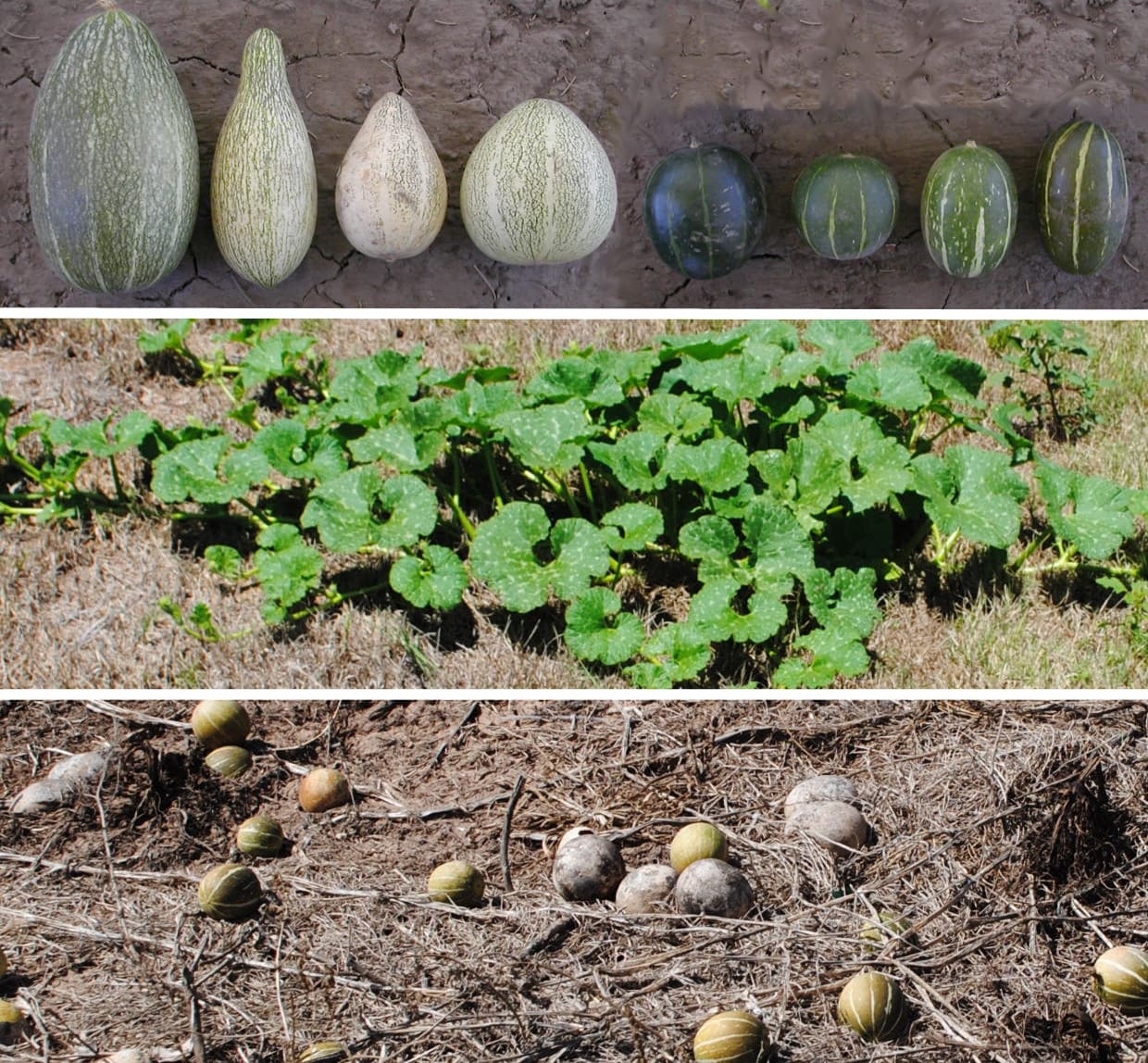
Since theoretically all Cucurbita species are crossable (Thus ID traits fluid) via Mentor Pollination & Introgression, you might not even need the wild species if you just cross & Landrace all the Domesticated species together (_C. ficifolia x C. maxima, x C. angyrosperma x C. moschata x C. pepo_). I wonder what the vigor would be on that landrace!
It’s a question I ask my self, is it worth hunting down those wild seeds or are the domesicated ones I have enough diveristy to do the job via interspecies crosses?
Anyways, what else have you learned about the Wild andreana? Let’s exchange each other’s research & Cross Pollinate the knowledge