My guess is the fox is eating aronia berries 

2 Likes
Sorghum is growing pretty well with next to no other input than some water, but pretty nutrient poor soil.


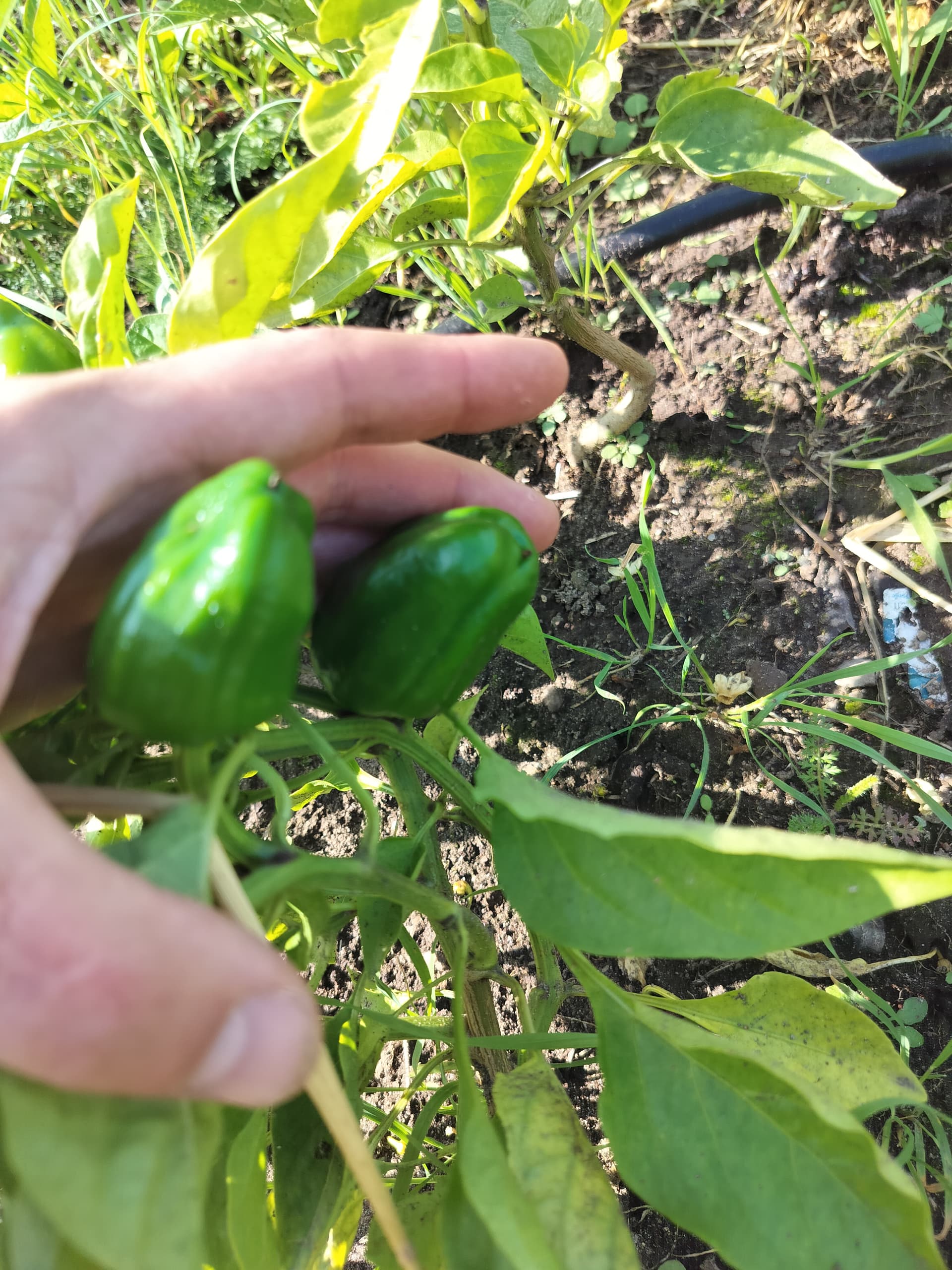
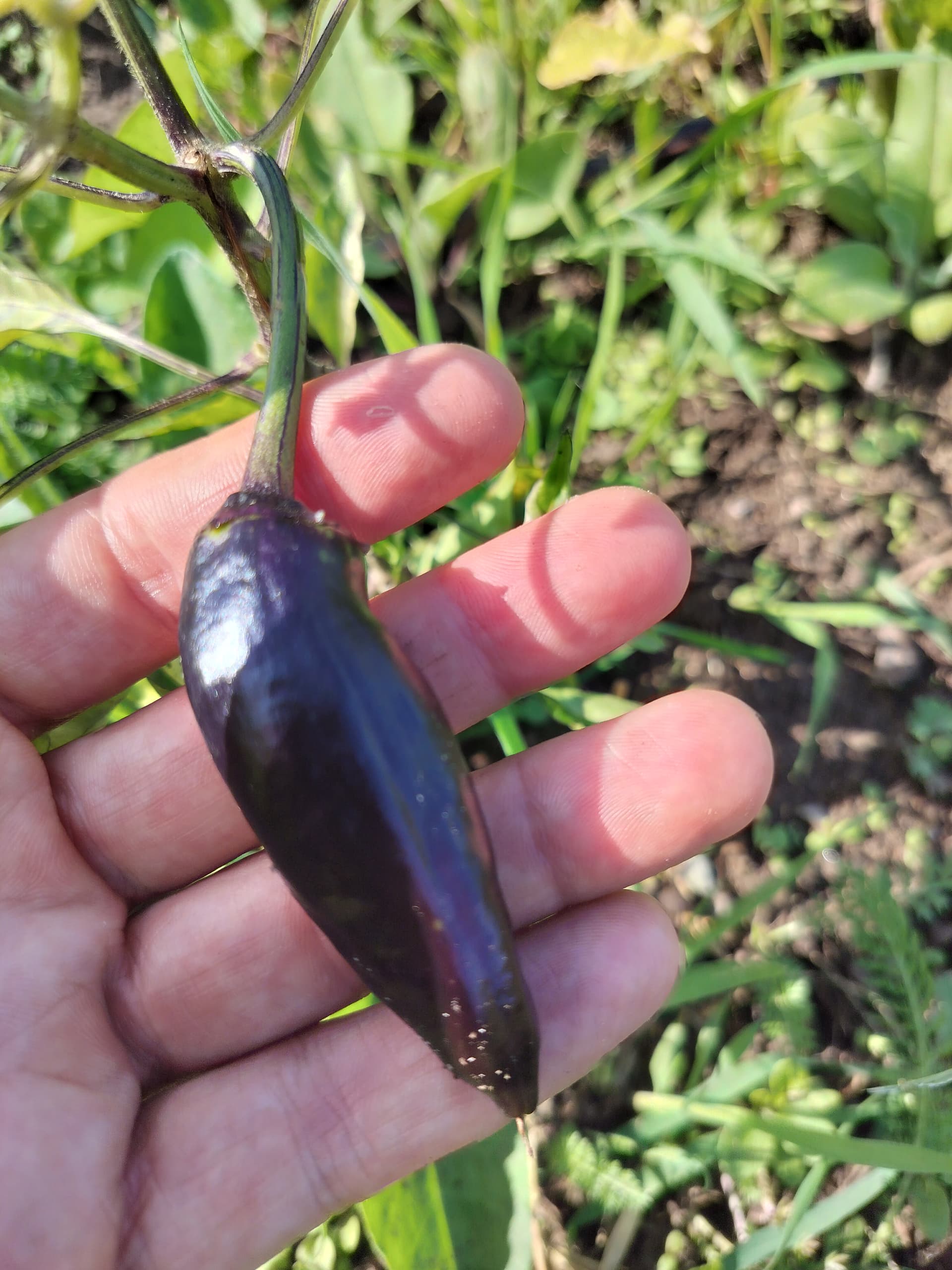
“Bell” Peppers are growing (although many of them don’t look like bells at all). I haven’t tasted yet, but they should be with no capsaicin. I believe most of the seed here probably comes from @JesseI . EDIT: Just looked up the sources and they seem to be more diverse mix, with some from Hungary, two populations from France (@ThomasPicard and @stephane_rave) and generally from the Serendipity chain. Some of that probably have genetics from Finland too, so it’s all a bewildering mess anyway)


2 Likes
I don’t think many of mine are supposet to be bell peppers. There are some bells in the crosses, but mostly quite varied and my experience is that it’s not dominant trait. As for capsaicin, depends what have you got. I think I had some of the earlier crosses that had 2 sweet parents, but after that I have just made randomly crosses. Hotness being dominant, later crosses most likely have capsaicin, although many can be fairly mild still. Depends what one likes. The bigger the fruit the milder they likely are. Only source for purple when underripe is random cross with purple fresno so they are likely to be hot.
Good to see them producing even if it doesn’t look like they have easy conditions. I think one of the bigest challenges with peppers is that they don’t do very well with neglect, especially with shorter season. Most be downsize of being bred in pots for too long. Hopefully can get something out out of wilds to help with that. Taste also is much better in wilds.
2 Likes
I just looked up the sources and they seem to be a more diverse mix, with some from Hungary, two populations from France (Thomas and Stéphane) and generally from the Serendipity chain. Some of that probably have genetics from you too, so it’s all a bewildering mess anyway.
I have been pleasantly surprised with the vegetative growth on Capsicum in these conditions with no mulch the whole season. Although if the grass creeps in too much, they seem to suffer. When you’re saying better taste in wilds, are that wild genetics or wild crosses?
My goal with those is definitely to select against capsaicin, because this is a crop type the chefs expect to have and want. I will divide Capsicum annuum up into two other types: Mild and Hot.
Similarly, I’m working on dividing C. chinense up into a Sweet, Mild and Hot (the last one I probably won’t grow). I can separate the groups by about 120 meters, which I think is more than enough when we taste every fruit.
yes my grex mainly contains many early varieties, not spicy. 
You will find in it my top 3 :
- big red peppers of the Holy Italian type from Wild Mountain Seeds
- small sweet and fruity oranges from Doe Hill
- and long fine red chili types but creamy and very productive Jimmy Nardelo.
and I hope for some crossings but I haven’t found one yet although I had made forced pollinations by hand
2 Likes
Taste, or better aroma, seemed unaffected in F1. Haven’t had F2s yet and I don’t know if these will get full taste as all are direct sown and have to be ripened indoors. Spiciness also seems to relatively unaffected in F1s compared to how much bigger some fruits were than the wild. Yet to try 1/4 wilds. Only downside with wilds (and most F1s) seems to be that they easily come of the stem, not right after ripening, but about a week after. They also don’t store as well. Some F1s didn’t have this trait so it’s all matter of selectively breeding.
Hotness is greatly related to the size of the fruit so that’s fairly easy to select against, at least if you are fine with them having some warmth. One thing to note with hotness is that there are several capsaisin compounds that have different type of punch. Hence different species have different type of heat. Chinense that has as much capsaisin than jalapeño is practically heatless. Similarly there are differences in the type of heat within species. Annuums have the most poignant type of heat even if they on average have the least capsaisin. Some are more poignant than others. I would say the wild I have had and subsequent crosses have had more pleasant heat, although it’s a bit hard to compare as they are on the hotter side. To me many jalapeños have more unpleasant heat even if they are milder.
I would think 10 meters is enough. Generally crosses happen only when they have enough flowers that attract pollinators. If you save seeds from the first fruits, then the chances of crosses are quite low even without any separation. I have had only one random cross that I know of over the years when I still was growing staple varieties. Although that was more easy to pick out as it was with purple leaved and thus cross was easily visible early on. Still there was no other that would have different looking fruits etc. Also I have noted that there aren’t pollinators going through them early on. Later on they should cross fairly easily, but still mostly selfed. I think there was some chart showing likelyhood of crosses in tomatoes and even 10m it started to get close to 0. If I remember correctly at least bumble bees don’t usually fly more than 25m from their nest. In case you need to grow them closer, you could do so with no significant risk. Have pumpkins in the middle and they are flooded with pollen 
1 Like
Too. Mine was a mix of the tastiest of last year, not necessarily early. Some could have cross already, but I’m quite sure most didn’t yet.
1 Like
Aubergines have been flowering for over a month and no fruit has set. I’ve had several plants to flower and there are lots of pollinators. What might be the problem?

I would say it’s too cold where you are. hopefully one will create a fruit and you can save seeds from those.
Cold might a factor, but if they haven’t done any fruits in a month then there should be some periods that are well suitable in temperatures. I haven’t had much problems, besides maybe later in the season. I have also pre selected my varieties and then selected best from those. Maybe some of them didn’t pollinate because of the cold, but I have ignored those from my memory because others did well enough. If it’s not that, it’s probably still something in the conditions like drought or lack of nutrients. I have noticed previously that they might not give out pollen that easily, but dispite that have been pollinated consistently.
I’ve had aubergine set fruit several seasons before and it is not colder this season. This is the first time I grow them in this area though.
1 Like
I think you suffer from the same mystery as me regarding the eggplants…
All my neighbors have beautiful eggplant full of fruits, mine remain dwarf like in your photo.
I tried lots of varieties, nothing changes… except with the Ping Tung grex from Wild Mountain Seed where I have some fruits.
This summer I watered, telling myself that it was the extreme heat and drought but nothing.
Since the end of August we have rains, the eggplants were starting to regain their health but without fruit.
like Jessel, since many year I suspect a nutrient problem. All my solanaceae are beautiful here without fertilization, but obviously there is something missing for eggplant in my field.
So from the beginning of September I started to irrigate with freshhorse manure decomposed in water…very high fertilisation to see what happen…never mind if I kill the plants given the late season !
My eggplants exploded and taken 20 cm in ten days, I have many flowers, many young fruits and collect the first mature fruits ! 
3 Likes
Wow, that’s an interesting anecdote that makes me want to try fertilizing my eggplants more! I remember having heard something similar from @Soeren who said his otherwise Northern aubergine ‘Sorte Ravne’ only produced if given lots of fertilizer.
2 Likes
I think there is same problem as with so many crops. They have been bred to to be spoiled. Even more so crops that generally are transplanted and grown in a pot or direct feeding systems. I believe part of the problem is that their root systems don’t develop as strong so they aren’t very good with drought or lack of nutrients. I tried to give everything less chicken manure than before which might be reason why some aren’t doing as well, but it’s hard to distinguish what effect early season deluge and late season drought have had. Some of the later eggplants which I expected to make at least something to eat have turned out to be just too slow. Temperatures haven’t been what eggplants would like and there could have been more water as well. I don’t think they need excessive amount of fertilizer to make at least something. This year they had only as much as I mix to the whole plot at the beginnig of the season. Squash and peppers had some extra. They could have made more fruits, but at least the first fruits mostly started to grow without problems. It’s a balance trying to push the limits without going over.
Interspecific cross with african eggplant seemed more tolerant to the drought, but unfortunately it seems like cross is a dead end that way. Should make the cross with african eggplant as the mother. Maybe next year. It seemed promising enough that it’s worth the trouble. Only problem is that african eggplant or the F1 (at least the way I made it) don’t like rain at all and it might be a problem keeping them alive. If someone else wants to try that, I could recommend it. Also have thought about using one of those wild species that easily crosses. Only problem is palability, but suppose that isn’t any more problem that with habrochaited crosses in tomatoes. Don’t know how easily they grow here thought.
1 Like
That’s exactly why, in my opinion, Ping Tung Grex grow well, because it’s the only landrace I’ve tried…
It must have a more efficient root system and certainly a better connection with the soil’s microbiology.
Have you ever tried some cross with solanum torvum sold as rootstock for eggplant?
1 Like
No I haven’t. I think this is the species that is easy to cross (don’t quote me on that), but I haven’t tried because it has at least taste problem and I have no idea how well it would grow here. Would be helpful if someone with longer season would make at least initial crosses. Over here the crossing window might be just a week or two, if it even grows well enough. That species should be easily available. I remember from one youtube lecture about eggplant breeding that they were able to cross something like 16 different species, but some only with embrio rescue and subsecuent problems with back crossing. That one had also crossability chart of sorts if I remember correctly.
Ah ok, very clear relation then. That makes the difference why my ones that i put in the hoop house very late do have fruits. Heat, compost and some watering.
Not very landracey though. I haven’t even tried them out. Maybe @ThomasPicard could fill us in on this one with his experience and that one of the PEPS group that grow a lot of aubergines.
I have no clue regarding eggplants. Just can tell that Jesse’s crosses have been very vigorous in my place in 2024. To the point that I only planted his f2s this year. Nevertheless in 2025 in a worse soil than 2024 they suffered obvious nutritionnal imbalances, postponing fruiting to late in season this year. The drought and heat didn’t help, I think it’s the main causal relationship. I’m just keeping track of the (late) high yielders, and will keep some seeds of those.
Regarding the PEPs group and eggplants we have nothing succesful right now. The friend doing crosses has had 2 failures of crossing 2 years in a row. So don’t expect anything on this side.
Maybe @Bruno could add something on eggplants as I know as a market gardener he has a contrasted experience: he tried some of Jesse’s f2s this year and was disappointed in terms of something I can’t remember (yields?) so he’s keeping with his usual varieties he has reproduced for long in the geenhouse.
1 Like
I can’t brag with yields, but as I have only grown F2s with direct sowing I can’t really say if they would have done better from transplants. I did expect them to do better, but so many problems that have hindered them that it’s not a surprise if they didn’t do more than they have. They are F2s so there might be too much variance to grow them traditionally and expect every plant to produce evenly. They would first have to go through some selection and stabilizing of certain traits that are necessary in that climate. Peppers I had some transplants grown from best of last years direct sown and they did fairly good overall.
It might be that our goals are so far away. For me it’s enough that they survive and pruduce some fruits. There is no continuation of the season so it’s better to have few (bigger if possible) fruits as fast as possible. Heat stress isn’t the same also, although I would say that it can get very dry here as well. I think I might have to try to push drought tolerance during fruiting as it’s too common here and I don’t want to rely on watering. African eggplant seems like it might hold some answers to that.
I’d like to know too. Interesting to hear how they work in different climates.
1 Like


