Has anyone tried eating Porcelain Berries (Ampelopsis glandulosa)?
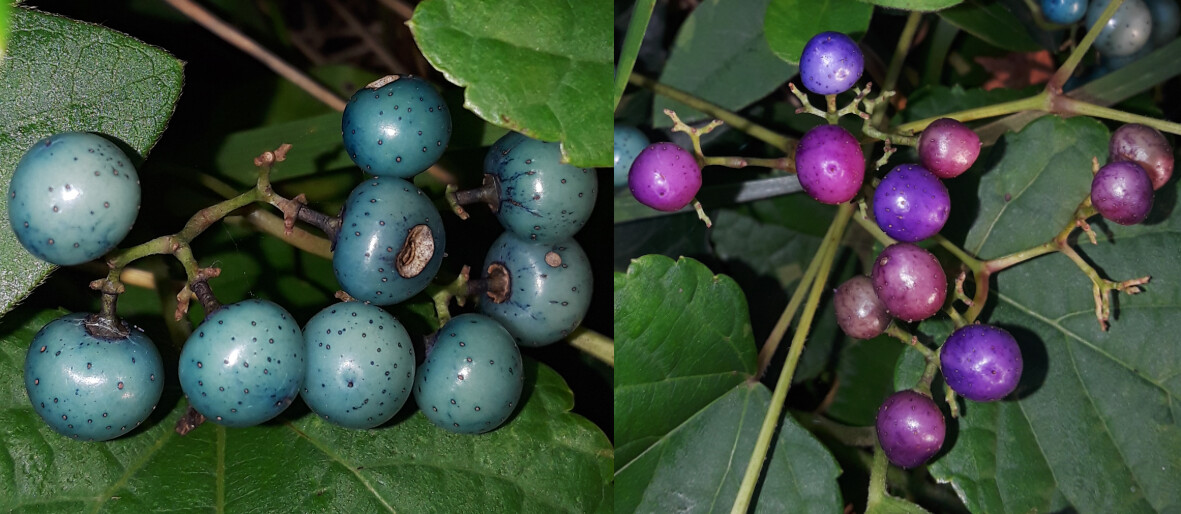
What’s very interesting about Porcelain Berries is the more riper they get, the more lighter Cyan Blue Color they are. These for example are Ripe Cyan vs the Purple Blue ones aren’t.
The light cyan blue berries taste like mild sweet berry x cantaloupe flavor, very nice! However I finally noticed the burning mouth feel after eating more darker blue & Purple berries (& crushing the seeds). I think this is because of the calcium oxalates it contains. It appears the more ripe the berry is, the less calcium oxalate it contains.
I wonder if we can domesticate these? Make the fruit larger, contain less mouth burninng feel (Altho this seems to be more of a “pick when ripe” thing rather than a genetic thing).
Here’s the phylogenic tree for Ampelopsis. Keep in mind the Ampelopsis arborea has been moved into it’s own genus Nekemias arborea. They are also edible but not that good, known as Racoon Berry but are more of a tree rather than a woody vine.
this is a bit crazy, but maybe it could be a good kind of crazy (depending on the outcomes)
There are other ways to defeat oxalates - e.g. many aroids also have large amounts of calcium oxalates, like Indian turnip, which was sliced thin and dried, and cooked for long periods to make the starchy corm edible. Taro is another example (and an aroid).
There is a question of whether either drying or long cooking, if effective, produces a food that is worth much to anyone.
Well maybe if the raphides can be bred out of it (reduced or a way to process them safely), that’s the problem that needs to be fixed for Arum family crops (like how was done with taro, exactly how you pointed out).
Here’s forager sam thayer’s page on Jack in the pulplit (what you refered to as Indian Turnip - which I don’t think that’s a good name for the species).
However it seems calcium oxalates are a different thing from raphides, Calcium oxalates seems to be completely gone in light blue fruits of Porcelain berry. Arums don’t work the same way.
what you refered to as Indian Turnip - which I don’t think that’s a good name for the species
I really don’t like the name jack in the pulpit either, and Indian turnip is also bad. It needs a new name, tbh - maybe something like northern or temperate taro?
I have the Thayer books, but thanks for including those pages for those who don’t have access.
However it seems calcium oxalates are a different thing from raphides, Calcium oxalates seems to be completely gone in light blue fruits of Porcelain berry. Arums don’t work the same way.
A quick search indicates the form in porcelain berry might be dihydrate druses rather than monohydrate raphides
Sounds like it’s less of a problem, for sure - more akin to spinach?
I agree! Jack-in-the-pulpit is long but I remember the name as that + no other plant shares that name other than other Jack-in-the-pulpit species, so because there’s no other better name it sticks.
But look on the bright side, at least its common name is not as bad as say… Jerusalem Artichoke (Helianthus tuberosus) which is not a artichoke or from Jerusalem, it’s a sunflower species with edible tubers, & thus the name Sunroot is a natural fit & pairs nicely with sunflower.
However hands down the worse common name is… brace yourself… RapeSeed (Brassica rapa) yup… not only was the “Rape” part bad enough but you also have to put seed right after wards implying the rape was successful at seeding??? Seriously who the actual fuck came up with such a horrible name for such a delicious wholesome plant!
Side tangent aside hahah see what I did there, not so funny pun
If you eat the light blue somewhat white-ish berries, those ones won’t give you any mouth burn feel as long as you don’t crush the seeds.
It’s a very atypical fruit because normally the deeper/darker the color is, the more ripe the fruit is yet… in Porcelain berry it’s the opposite where the lighter color is more ripe.


 hahah see what I did there, not so funny pun

