I will
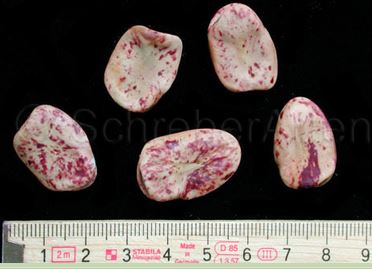
One of those two ‘marble’ favas is already sprouting
Interesting. Do you have any more info on this. Or maybe some link or something?
They are in the freeze as of today. I don’t think I’ll have large pupae, there’s none of the big holes that are usually a sign of those. But yes, freezing for a time, and then soaking wich is a normal procedur for planting favas for me.
Here’s a pdf were I saved photos of some interesting fingerprint and red cheeked favas, with links where I found them (including photo above) favas_interesting.pdf (7.6 MB)
I have those types. Red spot and others. Except it’s the same thing as with the Ur Kupina. Very few of them. I think all those special color patterns are recessive.
“Apparently the fingerprint pattern is recessive and easily lost when crossed with other varieties, so future breeding efforts could select for strong fingerprint patterning if you want that trait to continue.” Michalina from Cicaca seeds
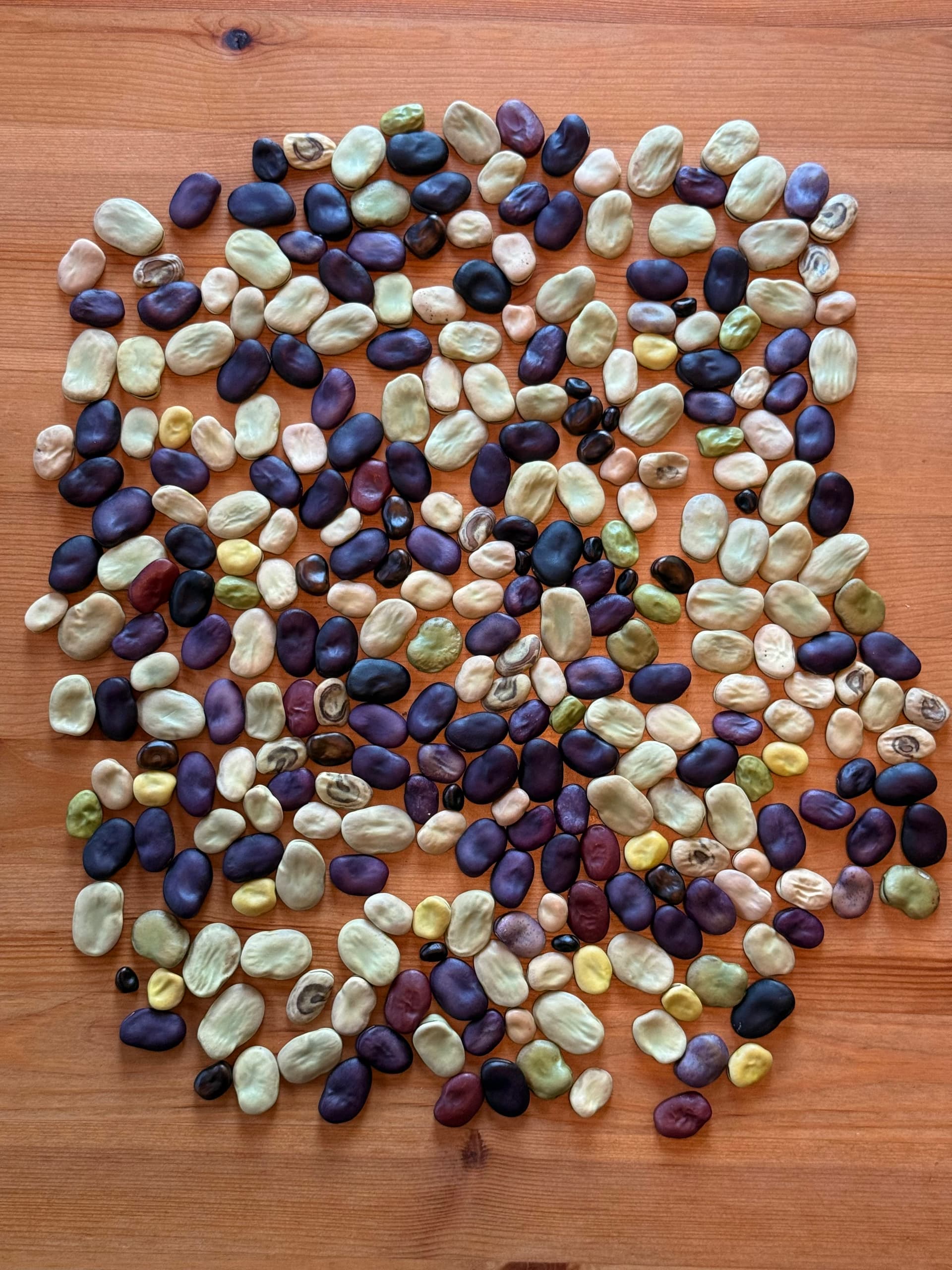
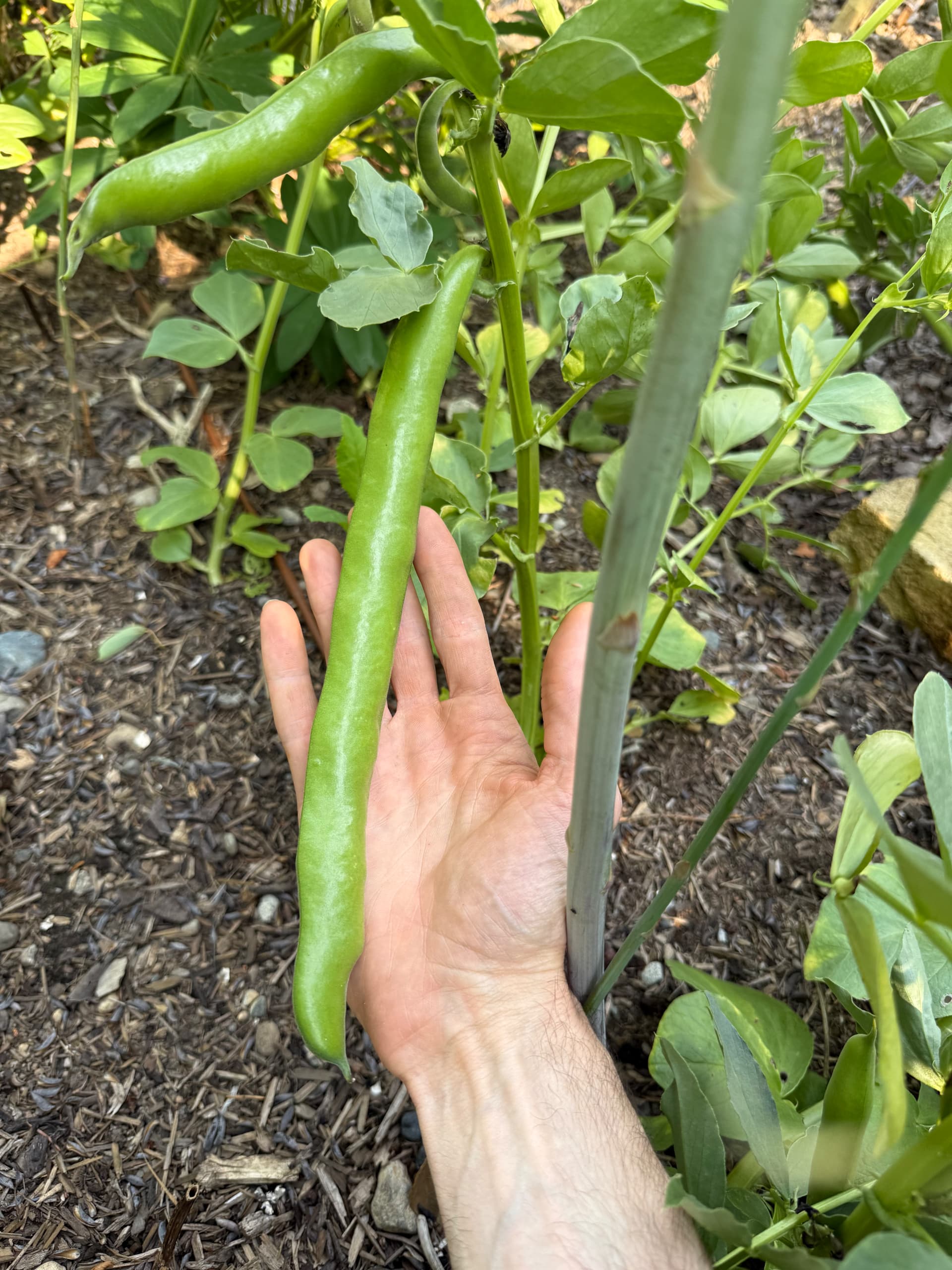
This is by far the best result I’ve had from fava beans. Most plants only had one or two pods but many different plants did produce.
In general the mature plants looked pretty sad by the end. Most of the pods were solid black, and it was not uncommon to pick a dry black pod off of a black stem that had lost all of its leaves. Yet I think these are generally going to be viable seeds for next year.
Hello Mark, the “sad look” i.e; black pods on black stems is the proper moment for harvesting dry fava beans for seeds or for long-keep protein.
you seem to have a good range of colours and sizes.
with regards to quantity , how does this compare to what you sowed ?
On my side, this year was the worse year , especially for those I sowed in march. most of the seedling were eaten by slugs and our very dry spring. Those I sowed in november did better, should have sowed more … but you never know in advance which of the two sowing sessions will come up all right. Newt year I might sow 3 or 4 sessions , in nov, dec, jan, feb …..
this year has been complicated for fava beans for many of us…my January sowing allowed me to eat it only once… the February sowing for the seeds gave almost nothing because it was too dry from the spring.
Your option seems good to make plenty of small seedlings or then make a large row and every 15 days add some seeds at the end to lengthen it.
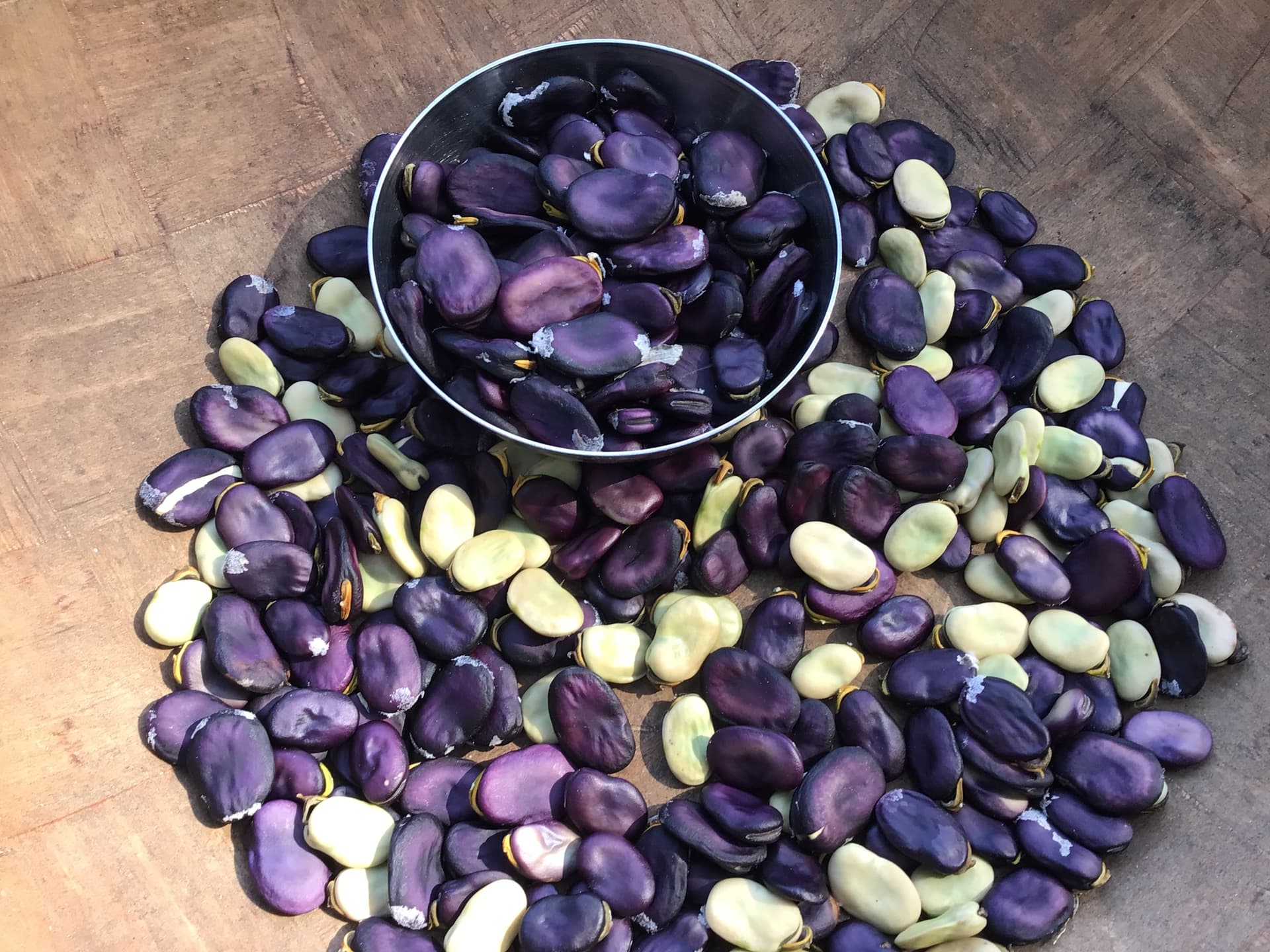
I have Been growing out these purple fava beans from one plant of “long podded favas” that had purple seeds, this is year 5 growing, always selecting for longest pods/biggest beans… Ive seen a huge difference in size the last two years! The voles decided my favas were delicious and started opening them up and eating them, but the beans inside the pods were feeling firm and past ideal eating stage, so I harvested the whole plants and let them dry, some of the seeds couldnt handle it but most were fine!!!this is the
The silver bowl in the last picture has the best favas: pods with 5 beans or more (first year i found 6 beans in one pod!!) or pods with beans excessively large, and this year I found plants that had set two pods at each node!
Just fyi these were direct sown begining of march, and seeds ready august 4th!
My harvest represents approximately a doubling from what I planted. It’s my best harvest after three years of learning to grow favas. For this crop, I began with one diverse Going to Seed packet plus a very small amount I saved from last year and a few more I received from the Serendipity Seed Swap! (US) in 2024.
In my garden in Eastern Kentucky, USA I have a lot of pest pressure on direct sown crops during the late winter and early spring. I think that favas have the potential to overcome this, either because the pests are less interested in them or maybe because they germinate in those temperatures and are no longer desirable to the voles, birds, etc that are eating my direct sown seeds during that time.
Of these two theories, I tend to think the correct one is that the favas germinate quickly. This year I started planting favas in early February. I wonder if I could try planting even a little earlier next year. Sometimes we have one or two nights as low as 0 degrees Fahrenheit, -17 Celsius. Those cold shocks and the pests are the concerns I think about the most.
with regards to pests, I don’t know if you have birds in your area but here in my current garden surrounded by lots of large trees, I have big birds who are able to spot the first leaves of any legumes coming out of the soil and would pick at them to get to the seed below. So I put a bird net over my direct sowings when I cannot mulch them because of slugs, which is particularly the case with legumes….
I have the experience that the bean dies around -8/-10°c here but with varieties like Aquadulce so rather genetics from the South.
Have you ever managed to go beyond -10°C with a wider grex?
Favas are well adapted to my climate so there’s not a ton of selection pressure on them beyond early maturity and overall productivity before the summer drought if they’re spring planted. I’ve been growing a purple Peruvian variety as a winter cover crop for years, but interplanted the GTS fava mix and ‘Aprovecho Select’ from Adaptive Seeds with them this spring to begin a grex. I plan to plant next year’s crop this fall and let them overwinter.
These are the best and/or most interesting seeds saved for next year. I saved the best 4-6 seeds from each plant to bring a wide range of genetics forward and give them more time and opportunities for crossing before doing much selection. I did keep all of the viable, disease free seeds from a few especially interesting plants that showed unique characteristics either in pod formation, flower color, or seed color/shape/size.
Beautiful spiral striped pattern. These genetics are Peruvian, but came from the GTS mix. I was glad to see that I got heathy disease free seeds from these even though the ones I planted had some black spotting on them.
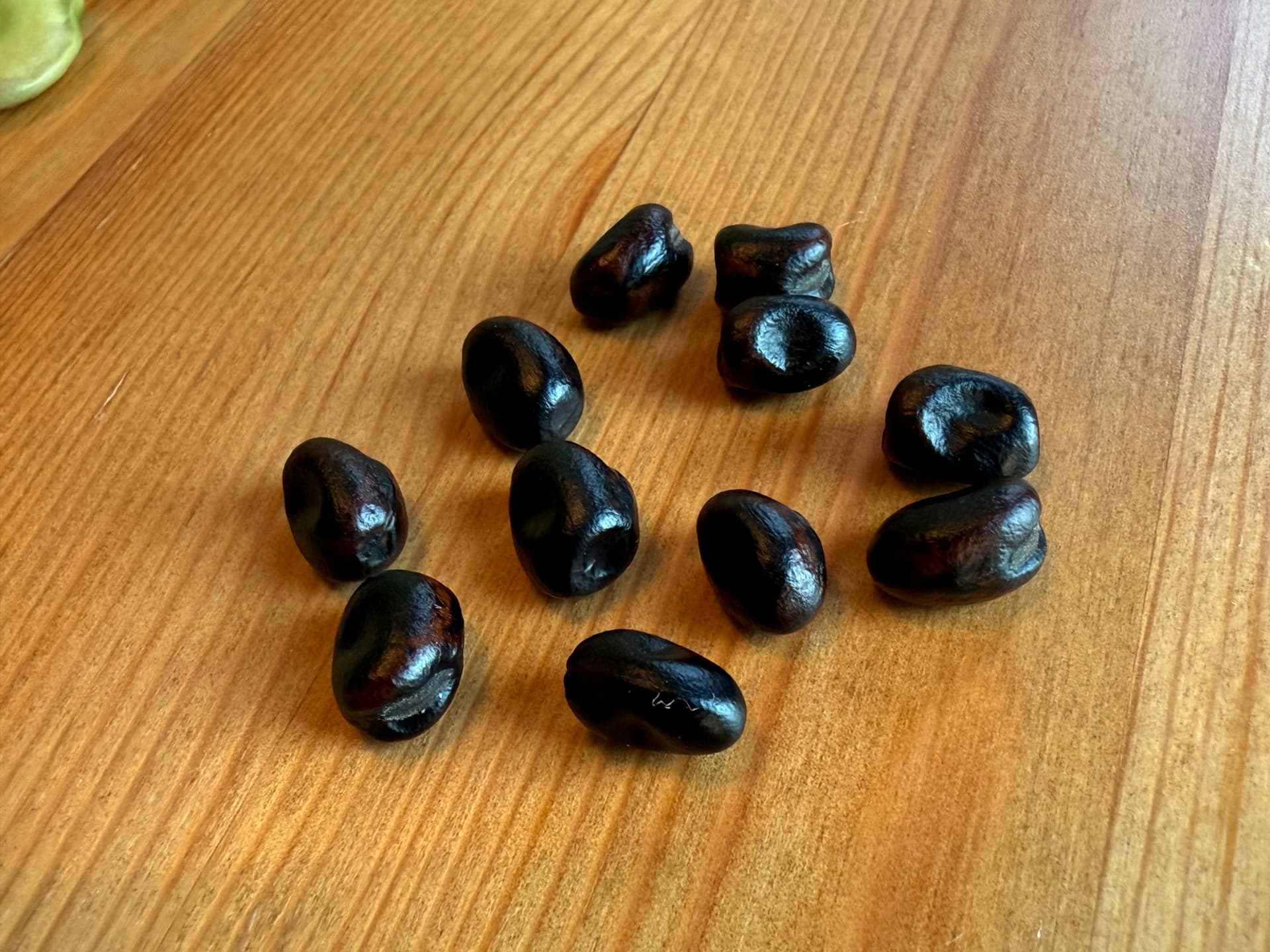
These tiny blackish brown seeds had red/orange colored speckles on them before drying down.
I really enjoyed seeing how much diversity there can be in favas this year, and look forward to learning how to incorporate them into my regular diet in future years.
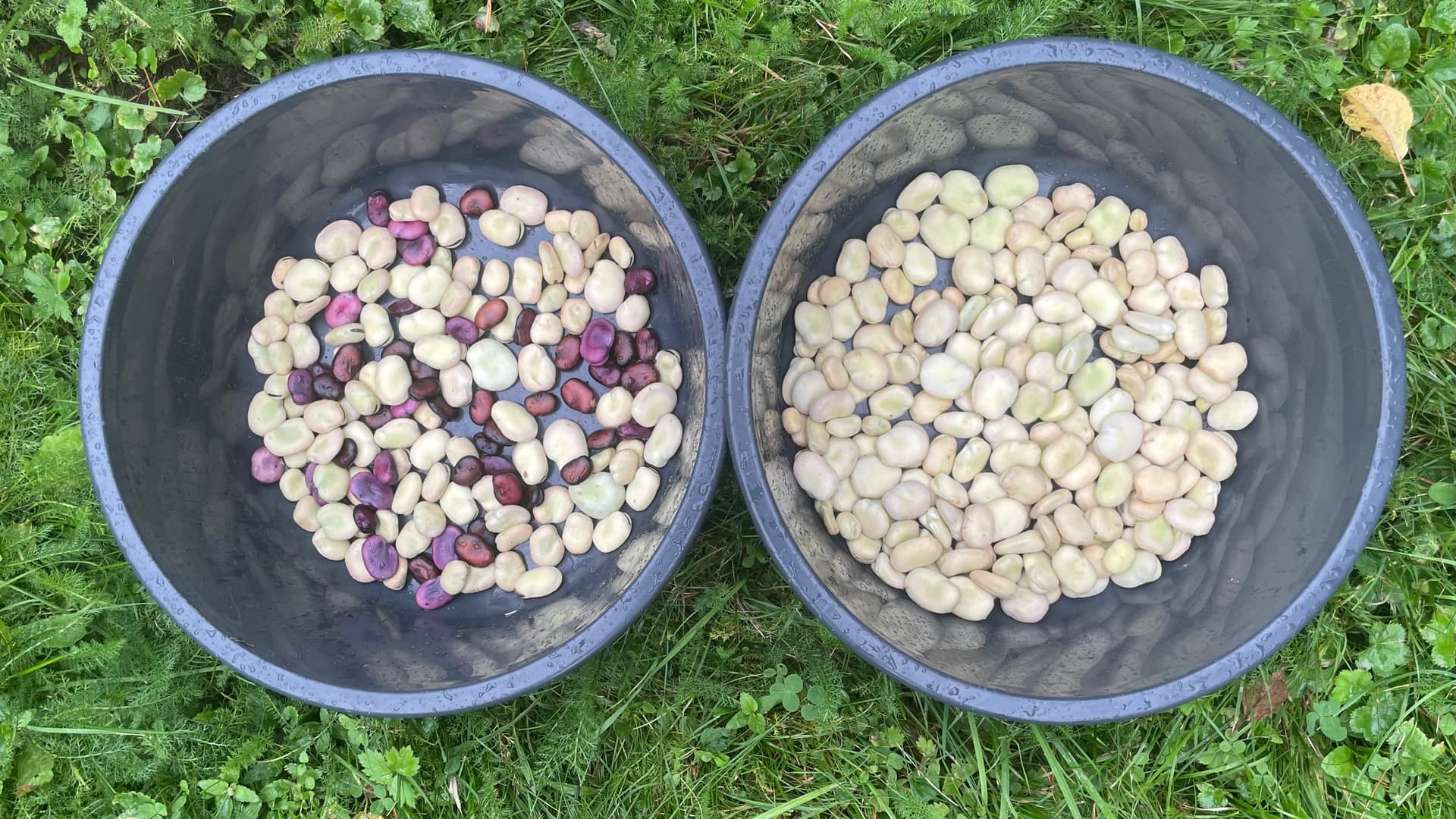
I planted a bed of favas with white hila (hilum(s)) only and this was the result, with a little over half keeping the recessive white hilum (right bucket).
The neighbouring bed was red/brown/purple/black favas with black hila. It wasn’t any kind of intentional experiment—and I know next to nothing about genetics—but I guess it shows there was some cross-pollination and that my white-hila population already had plenty of crosses in it?
Those spiral-patterned seeds are so beautiful. I also find myself drawn to the purple speckled beans. I love how many different colors you have represented in your mix!