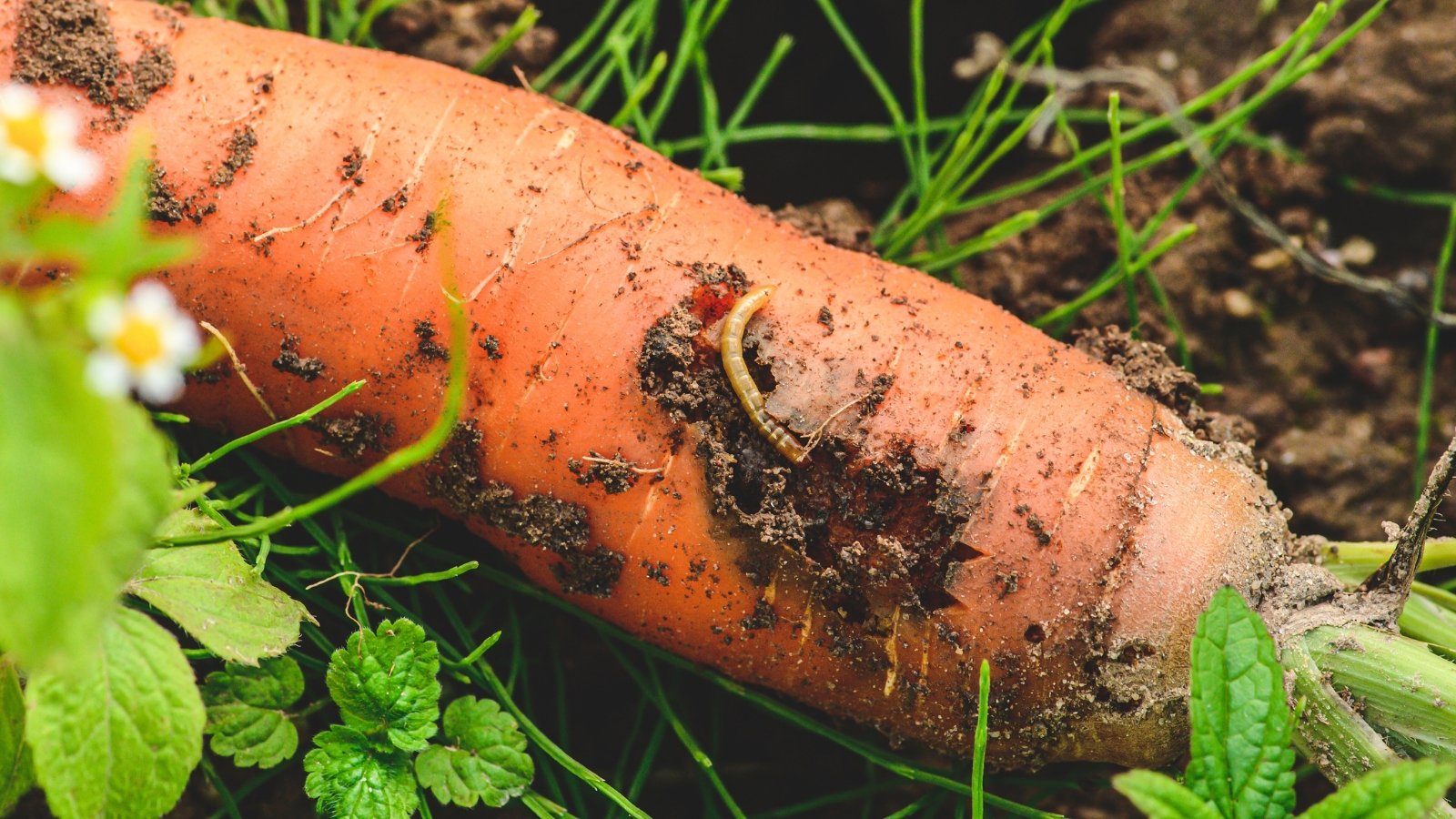
I want to discuss and learn about resistance in carrots, and possibly other roots in Apiaceae, to the carrot fly (Chamaepsila rosae)
This is high on my list for selecting resistance against. I do not like to grow vegetables under protective barriers like net.
I am curious if anyone has succeeded in breeding some resistance to carrot fly. And if possible, I am very curious what might be going on? I wonder if some carrot sit deeper in the soil and are then less attacked by the maggots that hatch at the surface. Or if the carrots produce compounds not liked by the maggots. And how might those compounds taste for us? Might they be some of the same flavor compounds we actually like? Or the opposite?
Great damage on carrots are easy to see. But what about the little nibbles that often show like rust-red dots on the carrot. How much of a problem is that? I tend to mostly select the roots without any visible damage and only take those with a little bit of damage if they have other good traits like size or color.
What I know about the carrot fly:
The fly lays eggs at the root of many umbellifers, and especially carrot gets hit hard. Eggs are put in cracks of the soil and the maggots then eat from the roots.
First flight is in May-June in my part of the world (Northern Europe) and then second cycle in July-August, where roots are hit the hardest.
Popular growing method is to put insect net on carrots. You can probably skip netting on the first cycle, but most people I know put net on the second cycle of carrots.
I found an article about breeding resistance for carrot fly: Ellis, B. (1992). Breeding carrots resistant to carrot fly. The Horticulturist, 1(2), 2-4. (Open access)
I also learned that the compound carrot flies navigate by is chlorogenic acid. It is a volatile compound that is an important part of the taste in carrots. When carrot leaves or roots are damaged, they release this volatile compound and the flies can register it kilometers away.
Some varieties have exploited this fact by breeding low or even zero chlorogenic acid containing carrots. I have not grown any of these. My concern is that they will taste more bland. Carrots contain many other tasty compounds though, so it is possible that there are ways to compensate.
These varieties are often F1-hybrids and modern hybrid carrots are known to be bred with CMS, so if anyone wants to experiment with this germplasm, you would have to then select against the male sterility in later generations and make sure to not share the seeds with people unless they are onboard that project.
I have only experience of the damage. So much that I haven’t really bothered to grow them that much over the years when most have been damaged anyway. Flyaway didn’t seem to resist any more than others, although sample size was small. Similarly can’t say if the varieties that same year did better were actually tolerant or if it was just small sample size. This year, growing from the varieties (most of which were F1s), there seemed to be less. Again it might be just this years peculiarity when the population hasn’t settled in the ground or maybe not weeding early in the season helped. Need to try more to see if there is difference. Still there were quite a lot of roots that had some damage. Interestingly only 1 out of 41 roots that I selected in the field without washing had any damage from the fly. Now that I have eaten a lot of the ones I left for eating, it seems that those have way more damage. Maybe something like 1/5 or 1/3. Which came first, egg or chicken? Did those I saved for seed grow better because they didn’t have damage or were they protected from the damage that allowed them to grow better? Certainly makes sense that they would grow better if there is no damage, but there is really now way of saying why there isn’t damage. If there had been more damage in the remaining roots, then there would be quite a good case for tolerance. Now there was the whole range of sizes, and not like some that were way better than anything else. There seems to be some correlation with size/damage also those that I left to eat. Smaller roots, more damage. I suppose over the years some tolerance will develop when cream rises to the top, but with the 2 years cycle to produce seeds it takes some time.