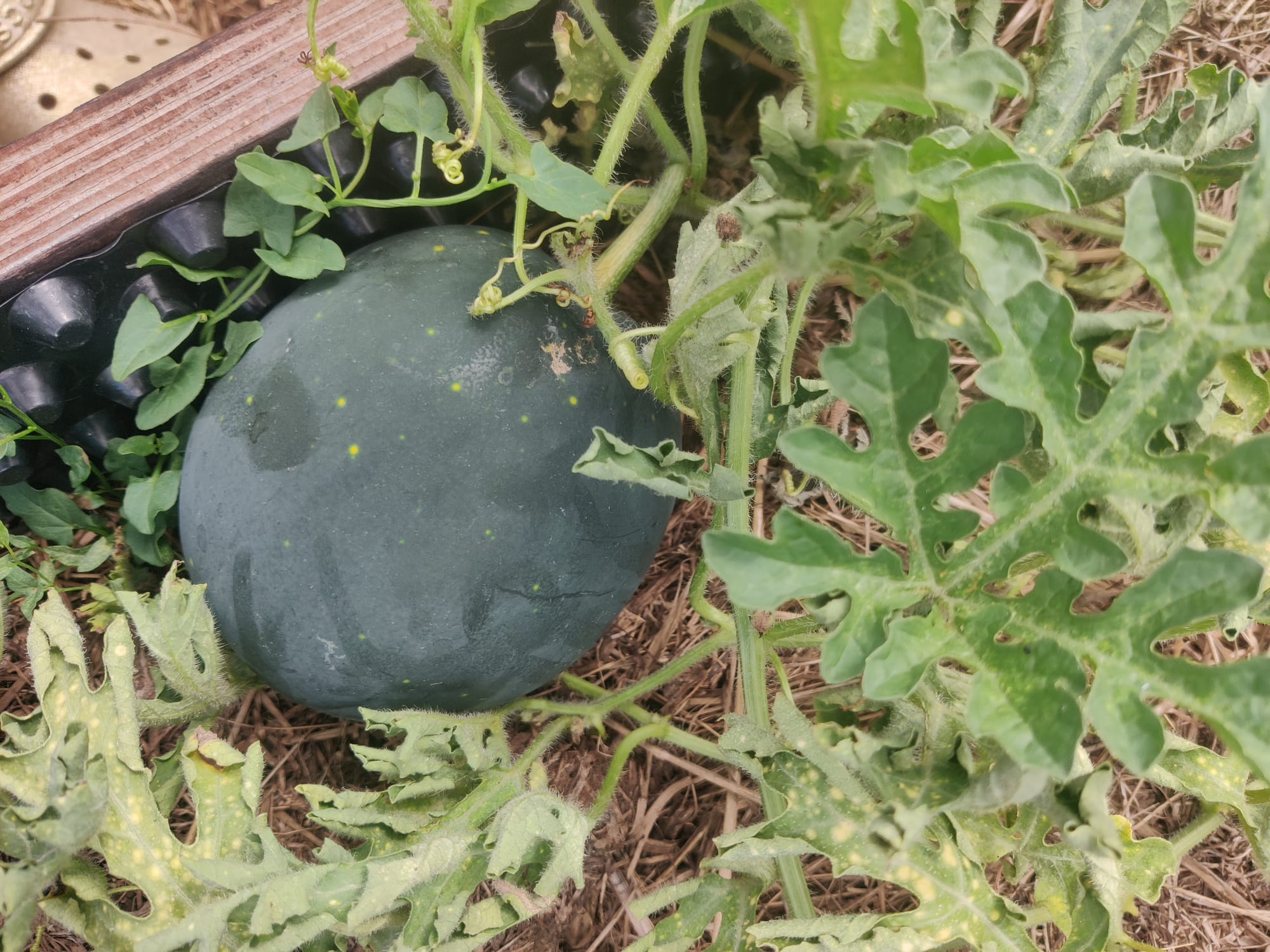
Hello everyone! This year I am embarking on my very first landrace project. I’m in France in the Loire region where I have sandy but healthy soil and it gets quite hot in summer. My goal is to create a strong landrace of smaller delicious watermelons. For now, watermelons are taking over my garden!
Year 1 (2025):
April 7th:
planted 6 seeds each of the following varieties in a greenhouse in pots: Cekirdegi oyali, lune étoile, early moon beam, strawberry, charleston grey, desert king, sugar baby, royal golden, melitopolski, small shining light
I also planted 12 seeds from @ThomasPicard 's watermelon mix that he very generously shared with me.
May 11th: I planted 3 plants of each variety and 5 of Thomas’ plants in the garden. So far everything besides one more scrawny plant is doing quite well. I have a total of 35 plants in the garden. For the rest of them I’m going to wait to see if I have to replace plants before planting them elsewhere. I was thinking about underplanting some young trees with watermelons? Anyone have advice on that?
Watermelons are a desert plant, traditionally dry farmed in the sandy wadis. They probably need less water than you would think.
I never water mine, although my situation is quite different from yours. At my old home, I grew watermelons dry in sand (under deep woodchip mulch) or with once a month watering. At the least, pull water off when they start to ripen.
Hi! Just a quick update—sorry I haven’t been very diligent about posting updates. I’m still watering a little because it’s been raining very little here for the past two months, but I’m trying to keep it to a minimum. Some areas and varieties are doing better than others. I haven’t marked the varieties, but I note that the Royal Golden is quite weak in my garden (easy to spot because it’s yellow!) and otherwise there is still variety in the appearance of the fruits, so I deduce that at least 6 varieties are doing well in the garden, and there are a few that don’t have fruit yet, so I’ll soon see if there are more. The vines are still producing a lot of flowers, so I’m hopeful that there will be even more cross-pollination!
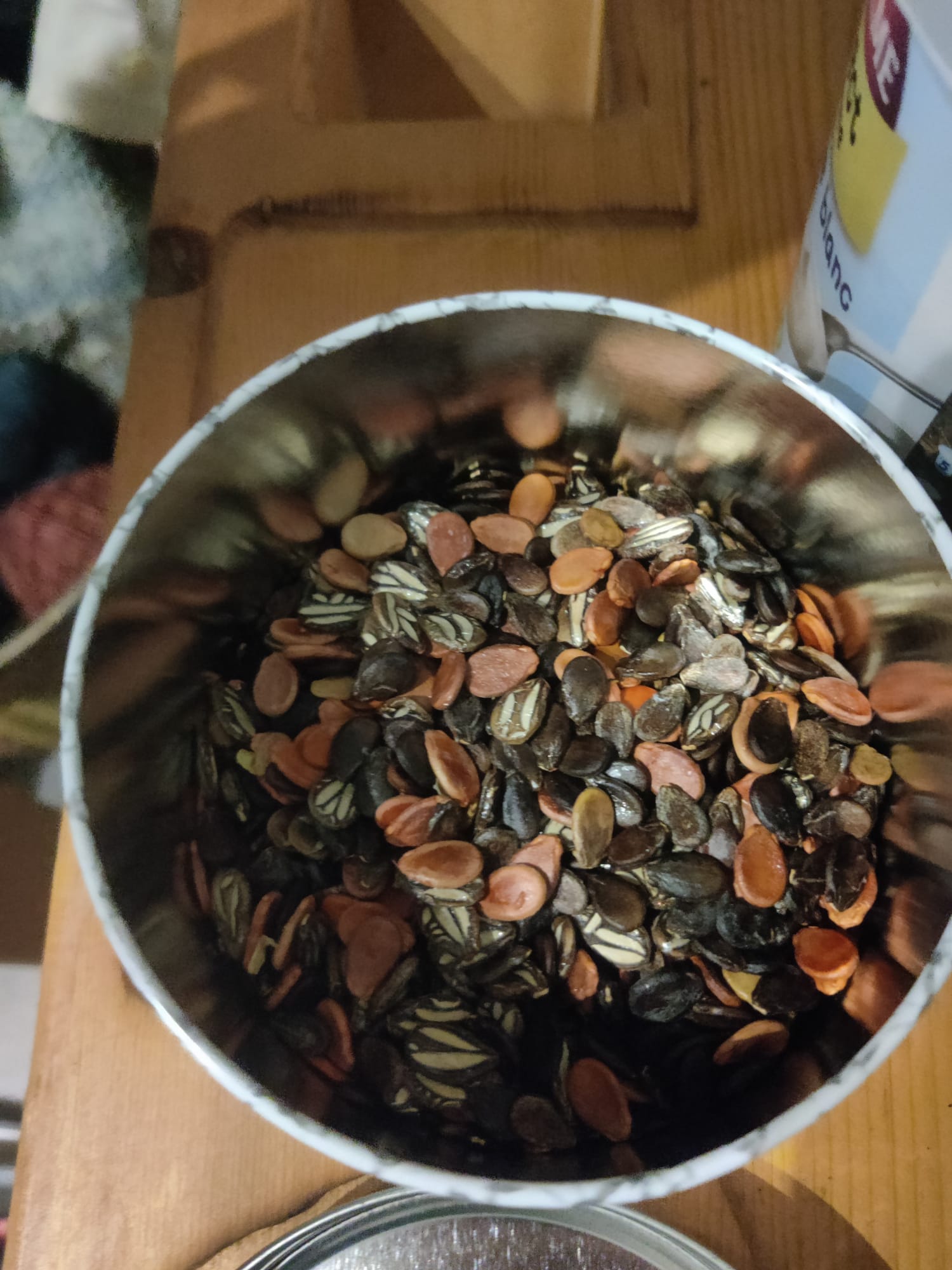
Hello, just a little update! While not all of the plants did well, I do have a little jar full of seeds and it is very satisfying. Here’s a photo of it before I had everything in there, so there’s a bit more than that now.
A mix of blacks, browns, reddish, and the black cracked with white of the cekirdegi oyali, which did super well this year. The seeds are very beautiful and I found the fruit to have a very nice taste. Here they are:
I’ve collected some new varieties to add to the planting next year during my travels in the US and Canada. My plan is to plant my new mixed seeds, but also at least one or two of each of the new varieties to mix in there. I’m wondering if I should also plant one or two plants of the original varieties in the mix to give a chance to those that didn’t quite get to add their genes to the mix this past summer for one reason or another? Any opinions on that?
REMINDER: I try to choose varieties mostly that give smaller fruit as I don’t want huge ones. Besides that I’m trying to throw everything into the soup!
The new varieties (yes I’ve got a bit crazy ahah):
I’ll also be participating in the Community project: Focus crops in Europe for watermelon, so I’m looking forward to sharing with the other members of that projet.
I have to admit I haven’t gotten that far yet! I have a bit limited space in the dedicated nicely taken care of veggie garden, but lots of space elsewhere so I’m thinking of doing them in both spots. Any advice?
The watermelon season starts for 2026! I seeded this year’s new varieties on April 8th into pots in my greenhouse. I’m nervous to direct sow given that I have limited seed of these varieties.
I’m unsure still whether I will seed in pots at least one plant from each of the original 2025 varieties as well as there are some that I’m not sure got to properly contribute their genetics to the mix and perhaps are due a second chance. It seems I’ve gone rapidly from needing more space for watermelons to needing even more space in order to plant as many as I’d like!
This is also hard question for me. I’m starting to think that at some point I just have to move on as most varieties just wouldn’t do very well and getting them to even contribute in my short (generally) cool season is questionable. Also I’m limited in the space (or not really, but it doesn’t make sense to have more space if they can’t survive) and I don’t want to waste it too much when even the best might fail any given year. That said, I might save some space to those that are more uncertain or that I have found to be interesting and want to give change to contribute. Since you have more favourable climate, the space is most limiting factor. You can grow quite a many different plants in a small space for pollen contribution and to produce 1 fruit per plant. When I started growing watermelons, I would prune them to single stem with one fruit. Those are generally smaller in size (although not that much from average/max size, like half), but you could have double row in a bed of 70-80cm with 30-40cm spacing or single row in a narrower bed. So you wouldn’t need much space at all to have dozens of varieties.
Another good option is to share those seeds to community and so the genes might come back to you down the line. After all you don’t get anything extra from growing all the seeds from seedpacks of stable varieties. Ok, little more different compinations, but there are more compinations to be had when you grow as many different varieties.
May 6th: I’ve directed seeded some of last years grex in the field with no added fertility. Just a bit of wood chips on top (what I had on hand right by there) in a fine layer, because in this area the soil gets hard as a rock if left uncovered. We’ve had lots of rain lately so I wanted to benefit from this as they are in an area that is less easy to water than my kitchen garden. I will most likely be doing other batches of direct seeding over the next few weeks and my varieties started in the greenhouse in pots will get planted outdoors as well in the next week or so.
As of June 19th. It’s almost 40 degrees here and these guys have still had no irrigation other than rain. They are holding out well! I have a couple surviving plants growing poorly and a couple seeds still germinating sporadically in my garden elsewhere, but it seems like this batch will the the area to watch this summer, fingers crossed. I have some burrowing rodent action in this area as can see on the photos, but I seeded very heavily.