In 2023 I planted some of Joseph Lofthouse’s carrots alongside some GtS carrots and a range of commercial varieties, including some purple types. I overwintered them under mulch without digging them up, and let the flower in the summer of 2024. (As a side note, they were some of the most insect-attracting plants in the yard, even compared with other umbel flowers; the air around them was buzzing with a wide range of critters.) I saved the seeds, but wasn’t able to successfully plant any due to the lateness of the year and our dry late summers.
The plants had, however, scattered a lot of seed around, and this spring (2025) quite a few volunteer carrots came up. I’ve brought up the problems with volunteers from a seed saving perspective, but in this case I was happy to let them grow since I would carefully examine them before letting them go to seed. Since they were volunteers, many of them were growing in the unprepared path and bed edge areas.
A few days ago, I dug them up. Here is what the harvest looked like, after I had discarded the runty ones. Note the foot ruler for scale:
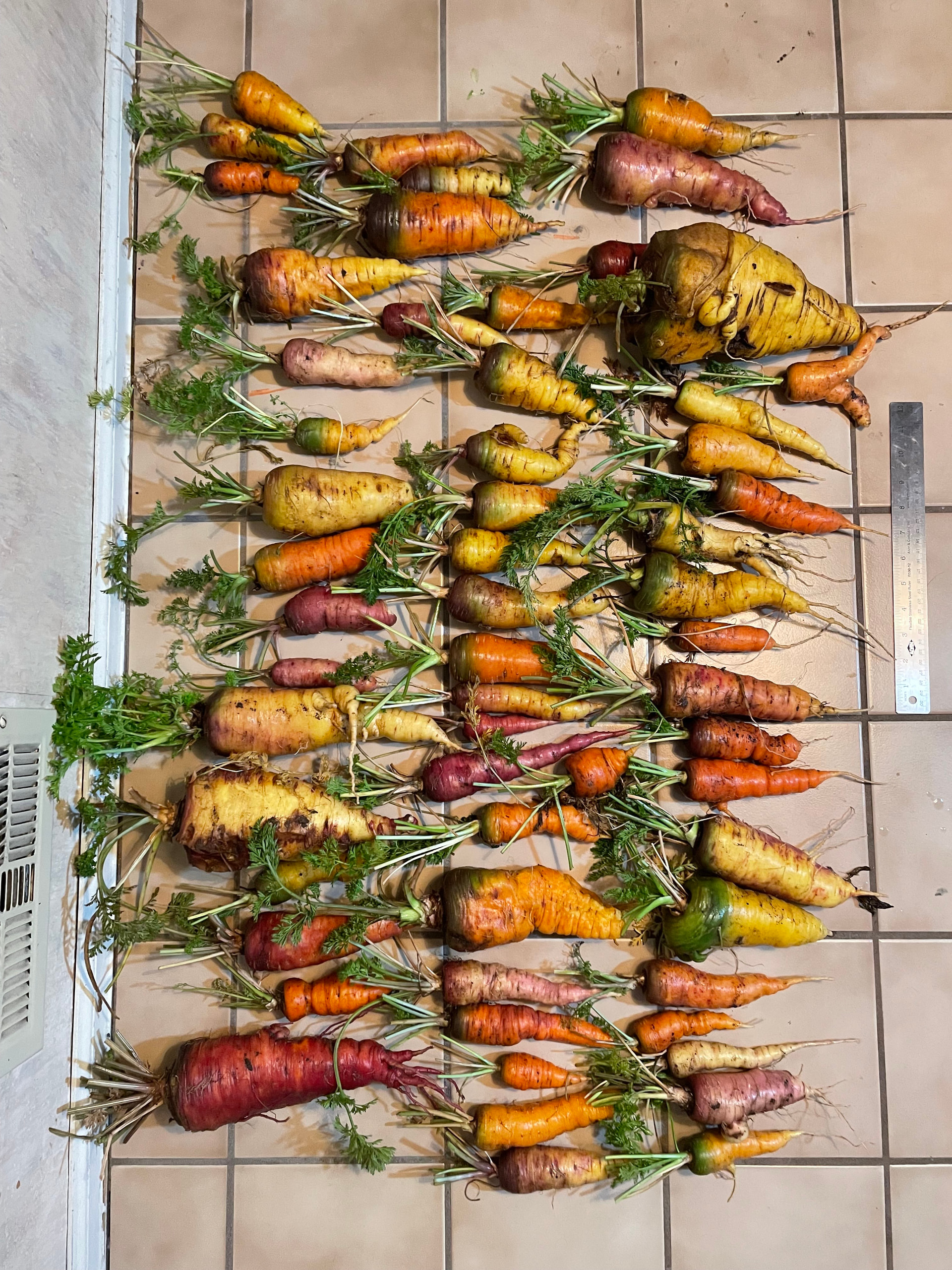
I want my carrot landrace to be brightly colored, both because I prefer bright colors and to make contamination from the ubiquitous Queen Anne’s Lace obvious. (White is dominant over orange in carrots.) I want a large, blocky shape which makes processing more efficient, rather than a long thin shape or a cone shape. And, of course, I want them to taste wonderful. So I tasted all the large, brightly colored carrots, and kept any that were at least fairly good tasting, ones that I would happily eat raw. (I figure that I can refine the taste in later generations; only one carrot had absolutely excellent taste.) I also tasted some of the white ones out of interest. As might be expected, the enormous white carrot didn’t taste that good, and was also hollow inside. The odd shapes are partly the result of growing in paths.
Here are the ones I selected ready for replanting. Note the contrasting core colors on some of the carrots:

Now it is just hoping that they overwinter well under the mulch!