Anyone growing Vigna spp. Beans or Cowpeas?
I was hoping to get a seed mix started with Vigna beans.
GTS did offer a “Not just cowpeas” seed mix in 2024, we skipped 2025 but I wonder if there’s enough interest to have one in 2026?
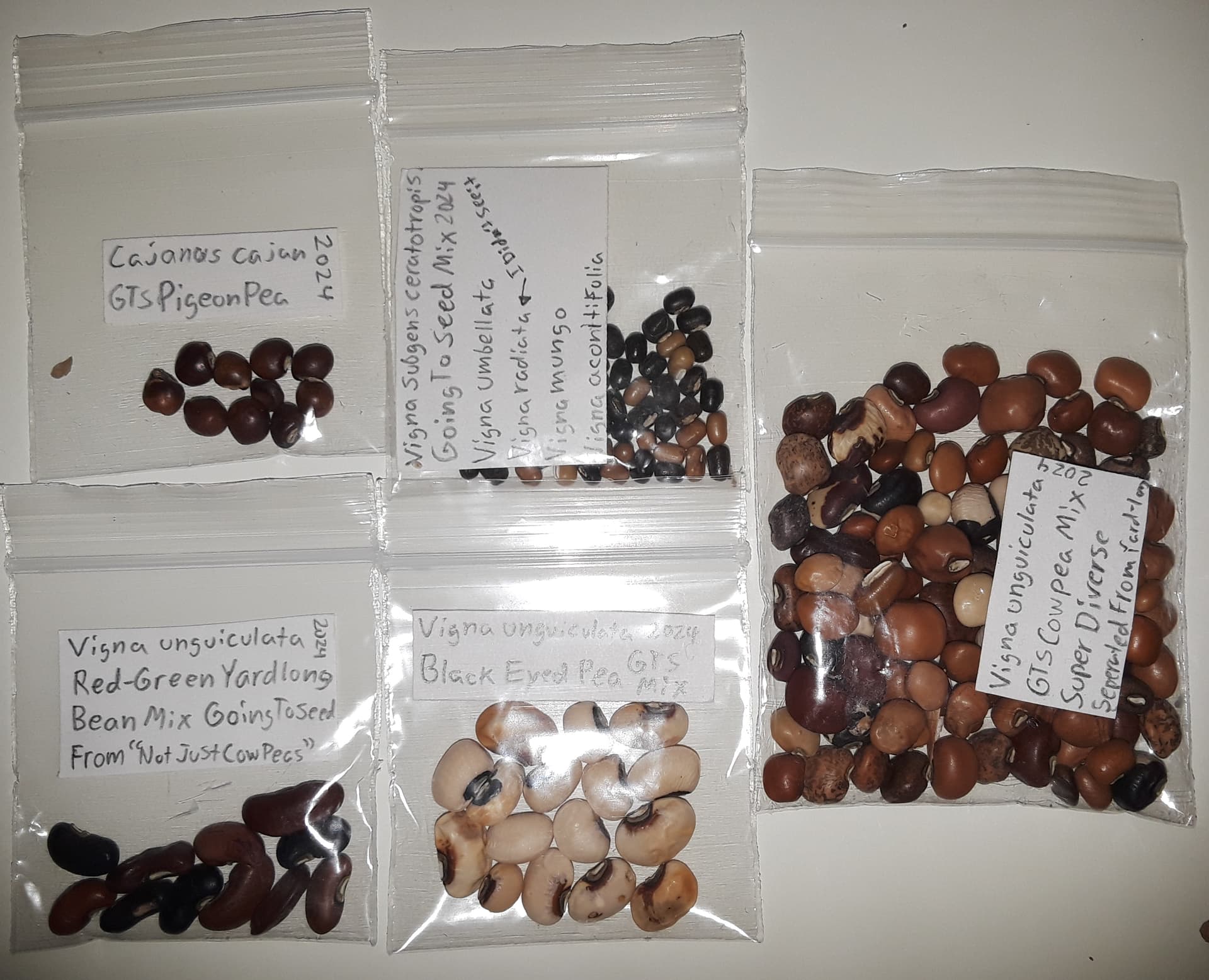
I received the “Not Just Cowpeas” in 2024 & I sorted them into separate groups. Majority of what was submitted were Vigna unguiculata. Some Pigeon Peas (Cajanus cajan) were also tossed in.
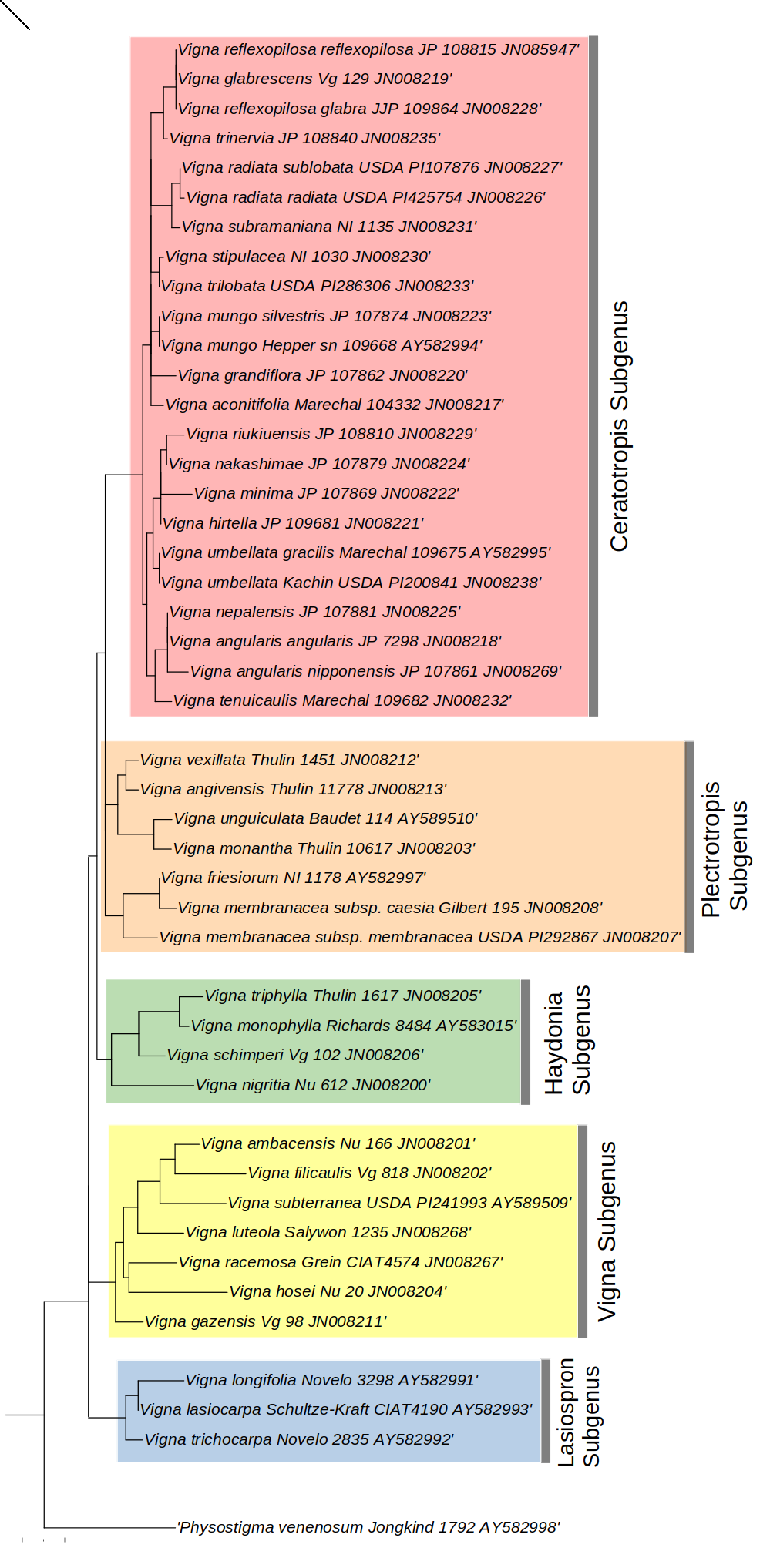
I was also hoping we could separate the Vigna into basic 2 groups that don’t hybridize between each other but mostly cross within their own group/subgenus. This way we can grow cross-compatible species together. Here’s how to ID them.
Cowpeas Group : Subgenus Plectotropis. These are mostly just Cowpeas. These have bigger purple to white flowers & more bean shaped seeds with distinct hilum.
Cowpeas/Black Eyed Peas (Vigna unguiculata) : These types were submitted last time.
Zombie Pea (Vigna vexillata) : I doubt anyone on here is growing these
Mung Bean Group : Subgenus Ceratotropis. In this group are Mung, Moth, Urad, Rice, Adzuki, and many more types/species. They are all cross-compatible. These have smaller, more twisty yellow flowers & more squarish/rectangular seeds.
I can contribute cowpeas. I’ve divided mine into two mixes (can’t say that I’ve seen evidence of crossing): bushy habit and climbing habit, each with 3 or 4 different ones. I will say - I’m about to retire my climbing habit cowpeas due to consistently much lower yield.
Bushy & Climbing habit is also another good way to sort them but that’s mostly if we get a bunch more like how was done with Common Beans (Phaseolus vulgaris).
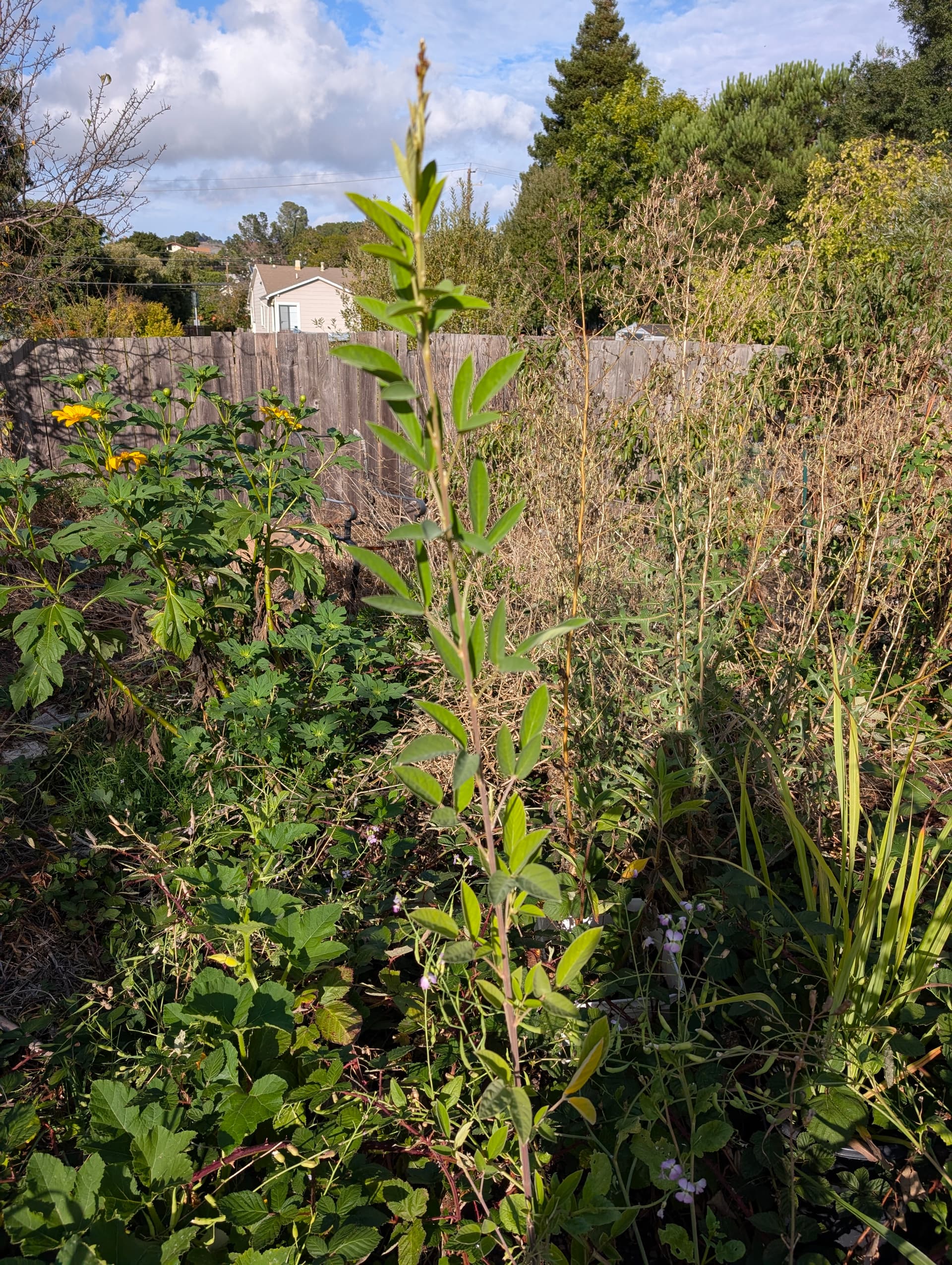
This has been my first year growing pigeon peas (Cajanus cajan) the ones that I started early in the season did not do well. I think I started them too early. I got a second set going. I hope I get seeds this year and then I could contribute for 2026. The tree is just starting to form flower buds. My first frost is usually late November time frame. I am in the Bay Area CA.
Fantastic! Which type of Pigeon peas are you growing? Share some photos!
I don’t know much about Pigeon peas, ideally it would be best for it’s own separate mix. But if there are only a few contributions than we can repeat trowing a few in from last time.
The tree is about 5 feet tall now and the flower buds just started forming. They are supposed to be able to live as a short-lived perrenial in my area and I hope to get at least a few pods this year.
cowpeas - got good harvests of Red Ripper (sprawler) and Mavuno (climber for me, though others say it doesn’t climb) and a first harvest of a small number of other varieties. (Sourced from ECHO, EFN, and friends)
yard long beans - poor performance so far, but I’ve gotten some seeds for resowing
wild mung bean, V. vexillata - grows very well here. The strain I have, originally from ECHO, has a similar running/sprawling habit as the Red Ripper cowpea. They’ve been pretty productive—not as much theoretical yield as from the cowpeas, but the wild mung beans are immune to the slug predation on green pods which has been a challenge off and on with cowpeas in the same beds
rice bean, V. umbellata - I’ve planted two types from ECHO, bush and a vining “Green.” Maybe I mixed up harvests at some point, or maybe the genetics are unstable, or maybe they just behave differently here, but my “bush” plants are crazy climbers. I’m not sure yet how practical the seed harvest will be. The greens make good eating, and relieve some of the pressure on the neighbor plants who expected well-behaved bush companions, not relentless vines.
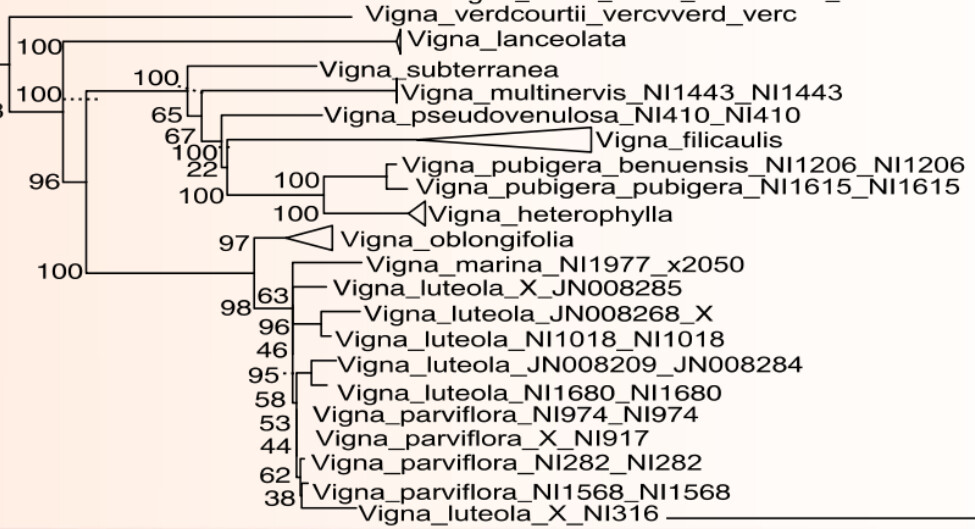
nanea / beach pea, V. marina - native here. I’ve mostly failed to establish any from seed, but cuttings took very well. Grew well this season and made many pods. The plants got knocked back hard by a droughty spell, but I think they’re still alive. Pods and seeds are small, so much less efficient to harvest and process than the cowpeas and wild mungs. I did cook a batch and it turned out fine, so breeding and/or hybridization for larger seeds could be worthwhile. Leaves are good to eat.
I could contribute lots of pigeon pea seeds, mostly “Black”, but also from several other varieties from ECHO. I have no idea whether they’ll do anything useful in temperate areas. I sent @Tanjaeskildsen a bunch in the spring; maybe she can share how they’ve done in Europe.
Apparently they are edible raw or cooked. They have soft easily peelable skin with creamy tasty flesh & can be boiled or roasted like sweet potato or cassava.
Reguardless I suspect it’s cross-compatible with Cowpeas (Vigna unguiculata) and the hybrid offspring will probably be even more adaptable. @norris Message me, I’d love to trade with ya for them & probably others too like Vigna marina.
Nice! This is a very interesting one as it’s closely related to Bambara beans, belonging to the same subgenus Vigna. They might be able to cross with a lil help. I didn’t think anyone was growing them, if we could include these, that would be epic too!
Sorry , i posted in the bad topic its a topic in vigna.I was mistaken.Someone can remove my last post please?
A diping during a night or some hours can be pertinent for get fat the seed.
When the seed are in ground the morning dew is the most part of time sufficient for started the germination for vigna unguiculata.
Too watered at the germination can rot the seeds.
In my low experience vigna unguiculata required a very draining soil for germinate and he moist in a too humid soil. He required a drought period for get flowers.
If someone want i have cow peas seeds dall’occhio veneto
That’s good to know, is this for all varieities? Vigna unguiculata is a really diverse species, makes me wonder how cultivars from tropical humid regions do, they might have better adapted genetics for those climates. I know there’s a Catjang Thai Black Bean, perhaps if it’s from thailand, it will have more humid/water adapted genetics compared to black eyed peas which are more dry-african adapted?
Drought period to get flowers? perhaps the stress triggered it to flower finally?
I grew two varieties in humid tropical Hawai’i last year, and both did great. This year I planted about 10 more varieties whose permformance I actually tracked, and 6 or 7 did quite well, and the rest all grew and made some seeds, but not as many.
I’ve planted another about 30 varieties in the past months, without trying to track what’s what. I’m seeing most of those germinating and thriving too. So, my limited experience is that they’re easy to grow, and mkae seeds well here. I’ve been poking the purchased seeds into the ground (with no presoaking); I’ll broadcast sow saved seed to select for easier planting. And at some point I need to segregate into bushy forms, running/low spreading ground cover types, and types that climb a lot. And I want to select for longer-lived plants, and/or self-seeding (I’m seeing some of that already), to minimize the planting I need to do.
The main challenge I’ve had is that at some point, someone else is discovering patches and eating nearly 100% of the peas. I’m not sure whether it’s slugs/snails, and/or rodents. The hairier pods of wild mung bean, Vigna vexillata, don’t get eaten, so maybe some hybridization would be great. Or maybe some of the unguiculata will reveal itself to already have resistance.
I can confirm it, I’ve done that with Phaseolus vulgaris, works like a charm even in the forrest. Vigna unguiculata also germinate well with this method (but groundhogs ate them much more).
I think so, if the hairy pods don’t ruin the texture of the green beans for you, this would awesome! Both species are likely cross compatible (Both species are in the same Subgenus Plectrotropis).
Speaking of which how big is your Vigna vexillata (Zombie pea)? Many different varities within that species, one that makes edible bigger tuberous roots.