


Peace y’all, Dominique here with Coyote Gourd Farms out in South Central Los Angeles. I’m focusing on multi-use perennial sorghum for the backyard gardener/urban subsistence grower. I grow on a quarter acre across 4 plots around the city, and we focus on drought tolerant African heirlooms from around the diaspora.
Sorghum is a traditional African grain with uses beyond what we’re familiar with. Feed, syrup, popped sorghum, fresh and storeable grain, with a tolerance to arid climates that is unrivaled by her close cousin, Sister Corn. Ideally a perennialized sorghum is low input (re:fertilizer and effort), high reward, and nutritious to the bodies and spirits of African people who are looking to uplift our traditional foods we have lost some access to.
I have 16 varieties planted, from varying nations in West, East and North Africa, as well as the US South and Southwest, where Pueblo folks have adopted this grain and grown it without irrigation for generations as well. Our first grow out is to increase seed supply, and determine which varieties are best suited to the climate (i.e which survive). Our subsequent grow outs will test for taste, multipurposeness, and we’ll do intentional work to look for crosses, and to increase the chances through some mechanical pollination support. By the third year, hopefully perenniality of some of the varieties will become clear!
5 Likes
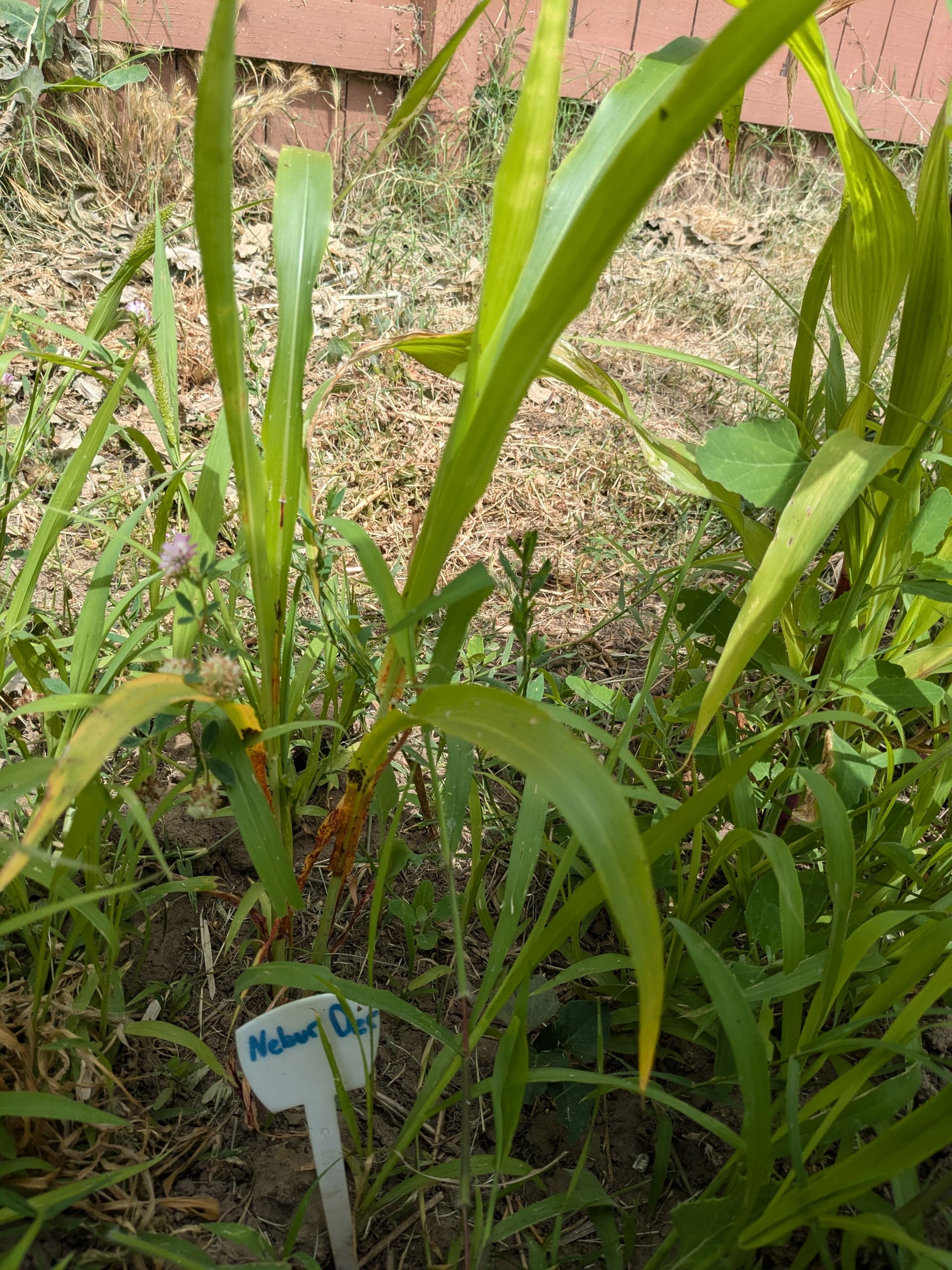
Some of the sorghum has already given up, we have about 12 varieties growing strong at the moment

The sorghum is intercroppes with corn, sweet potatoes and some Black eyes peas that may have to get replanted. There’s sesame in the front row as well. Seeds were direct seeded in May, and took a few weeks to get going due to some temp fluctuation. The Southwest varieties, and the Sudanese varieties are doing very well, and are catching up to the corn. There are about 60 plants across 12 varieties.
6 Likes
End of year update! So we harvested all the sorghum that survived, about 8 of the 16 in total.

Things were lookin sad and scraggly, and the birds got to some of it, so these are truly the most prolific survivors of what was a pretty bad California drought. They grew shorter than I hoped (lots of the easily visible stands in these pics are sweet corn, which survived far better than the black eyed peas in the intercrop), but that’s in quite a dry condition, so next year they’ll get a bit more moisture (we plan to up the mulch/intercropping, which was a bit of a fail this year) and hopefully get tall enough to support some African peas.

We have a good variety of colors and sizes, tho the red-seeded ones seemed to perform better overall.

Also the stands that are leftover from harvest are still growing and producing seed, so perhaps perenniality will be easier to select for than I thought (at least in my climate). This next year we’ll set out to grow enough for taste-testing, and select more heavily for ease of threshing (2 of the surviving varieties were not included in the mix due to poor threshability) and dual usage.

The bits of cane I got to taste this year weren’t very sweet, but I only had like 2, so there’s hope! And Sistah Seeds has a dual purpose sorghum that I may add back into the mix next year. I sent seed back, so get some from Going to Seed if you’re interested in stewarding some drought tolerant friends. Thanks so much to Going to Seed for supporting me and this project, it has been invaluable!
Please, to learn more about us and our work, go to Coyote Gourd Farms — black roots herbals. Much love! -Dominique

11 Likes
Beautiful ones the big grained black-white types on the last image. I’m just getting into growing Sorghum. How do you use them in the kitchen?
1 Like